FIELD GUIDE
Dali Travel Guide: Everything a First-Timer Needs to Know
A practical, locally written guide to Dali, Yunnan — how to get there, where to stay around Erhai Lake, what to see on Cangshan, what it costs, and when to come.
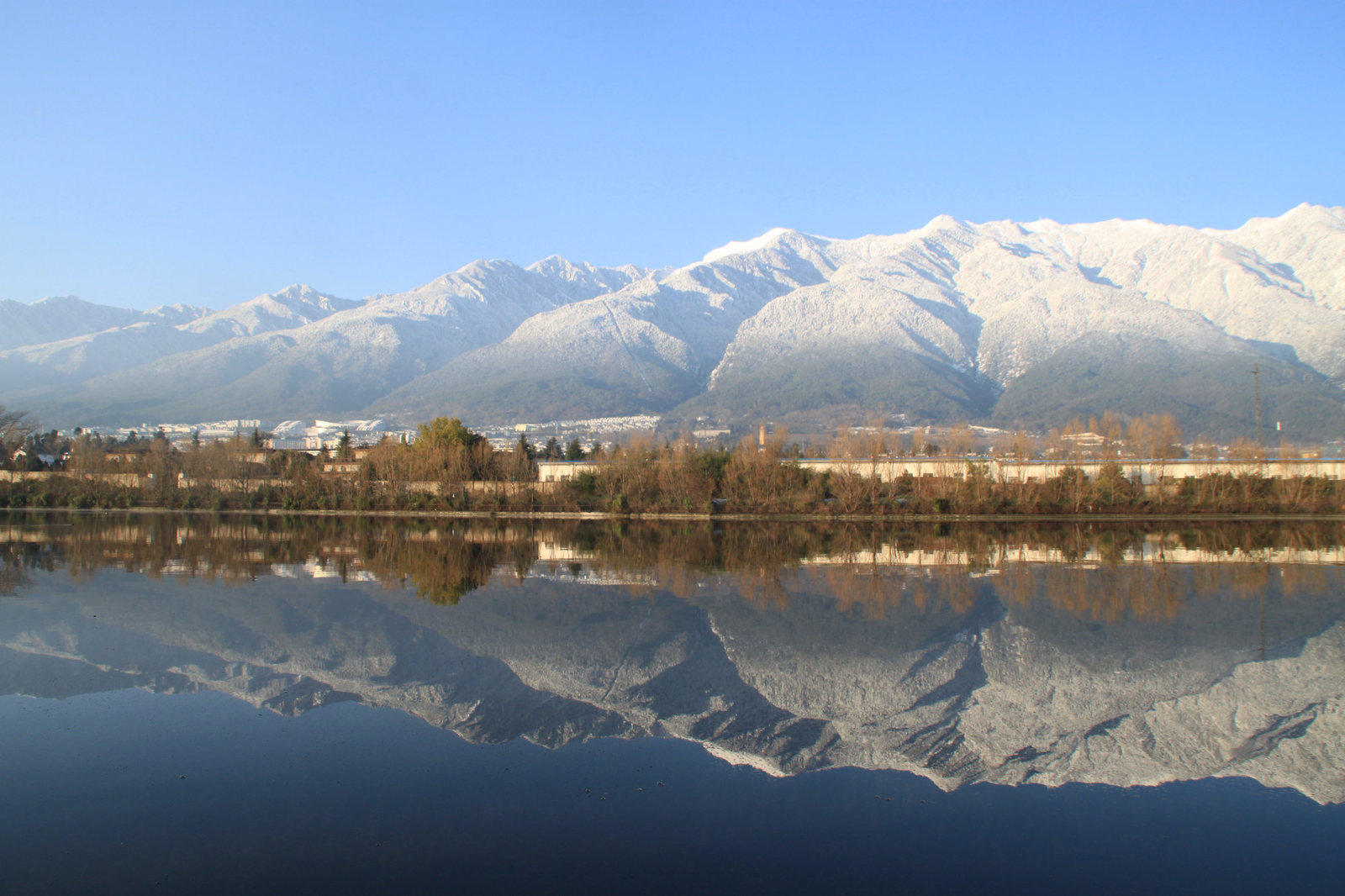
Dali sits at 1,976 metres on a plateau in western Yunnan, between a mountain range that rises to 4,122 metres and a lake 42 kilometres around. It is one of the few places in China where a 1,200-year-old walled town, a working Bai farming culture, snow on the peaks and warm afternoons by the water all sit within half an hour of each other.
I have lived and photographed here for years, which means most of what follows is not from a guidebook: it is what I tell friends when they ask how many days to allow, which side of the lake to sleep on, and why the mountain disappears at 10 a.m.
The three things Dali actually is
The old town (大理古城) — a grid of stone lanes rebuilt in the Ming style, with the 8th-century Three Pagodas just north. It is touristy in the main streets and quiet in the side ones. Two hours is enough to walk it; two evenings is better, because the town changes character after the tour buses leave at 6 p.m.
Erhai Lake (洱海) — 42 km of shoreline, ringed by villages, wetlands and bike paths. The west shore (才村, 喜洲, 双廊 side) is where most travellers ride; the east shore is emptier and better for sunrise from the water.
Cangshan (苍山) — the mountain wall behind the town, nineteen peaks, cloud forest, and a chairlift that takes you from subtropical farmland to alpine meadow in 20 minutes. On clear winter days there is snow above 3,500 m.
Getting there
By high-speed train — the easiest route. Kunming to Dali takes about 2 hours (¥145 second class), trains run through the day. The station is 12 km south of the old town; a taxi is around ¥40, or take bus 8.
By air — Dali Airport (DLU) has direct flights from Kunming, Chengdu, Chongqing, Shanghai and Guangzhou. From the airport it is 30 km to the old town (about ¥100 by taxi).
From Lijiang — 2 hours by train, or 3 by road. Most people do Dali first, then Lijiang, then Shangri-La; going the other way means you acclimatise faster to altitude.
Where to stay: the choice that shapes your trip
This is the decision that matters more than any itinerary.
Inside the old town — walkable to restaurants and bars, convenient for day trips, but noisy in the main lanes and you lose the lake view. Good for a first visit of 1–2 nights.
West shore villages (才村, 磻溪, 喜洲) — 10–20 minutes from the old town by scooter, right on the water, quieter, and where the best sunrise light hits the lake. This is where I would stay for a photography trip.
双廊 (Shuanglang) on the east shore — the classic "lake view" village, but heavily commercialised and expensive. Worth one night for the sunset over the water, not more.
Rough rates: guesthouses ¥180–350, lake-view boutique ¥400–900, luxury (there are a few design hotels) ¥1,200+.
What to do, day by day
Day 1 — old town and the pagodas. Walk the old town in the morning, Three Pagodas in the afternoon (entry around ¥75 — confirm at the gate, prices change). In the evening, eat on 人民路 and watch the town switch from souvenir mode to dinner mode.
Day 2 — Erhai Lake by scooter or e-bike. Rent an e-bike in the old town (¥60–80/day, bring your passport or a deposit). Ride north along the west shore: 才村 → 磻溪 → 喜洲 → 双廊 if you have the range. Lunch in 喜洲 for the local flatbread (喜洲粑粑). The full loop is 120 km, which is a long day — most people do the west shore and a bit of the east.
Day 3 — Cangshan. Take the 感通 cable car up, walk the 玉带云游路 (Jade Belt Cloud Road) — a 11 km stone path cut across the mountain face at about 2,600 m, with the lake below and cloud forest above. Allow 4–5 hours. Bring a jacket; it is 8–10 °C cooler up there.
Day 4 — a village day. 喜洲 for the Bai architecture and the morning market, 沙溪 if you want to go further (2 hours north, an old tea-horse road town that is still quiet).
What it costs
A comfortable mid-range day in Dali, per person:
| Item | Cost |
|---|---|
| Guesthouse (double room) | ¥200–400 |
| Breakfast / lunch / dinner | ¥15 / ¥35 / ¥60 |
| E-bike or scooter rental | ¥60–80 |
| Cable car (Cangshan) | ¥180–280 return |
| Three Pagodas entry | ~¥75 |
Call it ¥400–600 per day including transport, ¥250 if you are frugal and eat where locals eat.
When to come
- March–May — best overall. Clear skies, 15–24 °C, fields green, the lake calm.
- September–November — my favourite for photography: stable weather, golden light, fewer people after October.
- December–February — cold nights (near 0 °C), snow on Cangshan, but the clearest mountain views of the year and cheap rooms.
- June–August — rainy season. Not a washout — rain usually comes in short afternoon bursts — but the mountain is often clouded in and the lake turns grey.
One local rule: if Cangshan is invisible at 8 a.m., wait. The cloud often lifts by 10 and comes back at 4. The two clear windows are early morning and late afternoon.
Food you should not skip
- 乳扇 (rubing) — stretched cow's-milk cheese, grilled on a stick with rose jam.
- 喜洲粑粑 — flaky flatbread, sweet (rose sugar) or savoury (minced pork).
- 酸辣鱼 — sour-spicy fish from the lake, cooked with local pickled vegetables.
- 饵丝 — rice noodles in broth; the local breakfast.
Practical notes
- Altitude — 1,976 m is mild; you may feel short of breath on stairs for a day.
- Sun — ultraviolet at this altitude is brutal. SPF 50, hat, and a lens hood.
- Cash and payments — almost everything takes WeChat/Alipay; foreign cards work at larger hotels only. Carry some cash for village stalls.
- Language — English is limited outside hotels. Have your guesthouse's name and address in Chinese characters saved on your phone.
Prices and opening hours change. Every figure here was checked in November 2026 — confirm at the gate or on the official WeChat account before you rely on it.