FIELD GUIDE
Best Photo Spots in Dali: A Photographer's Map
Nine places I actually shoot in Dali, with the hour to be there, which direction the light comes from, and how to get to each one without a tour.
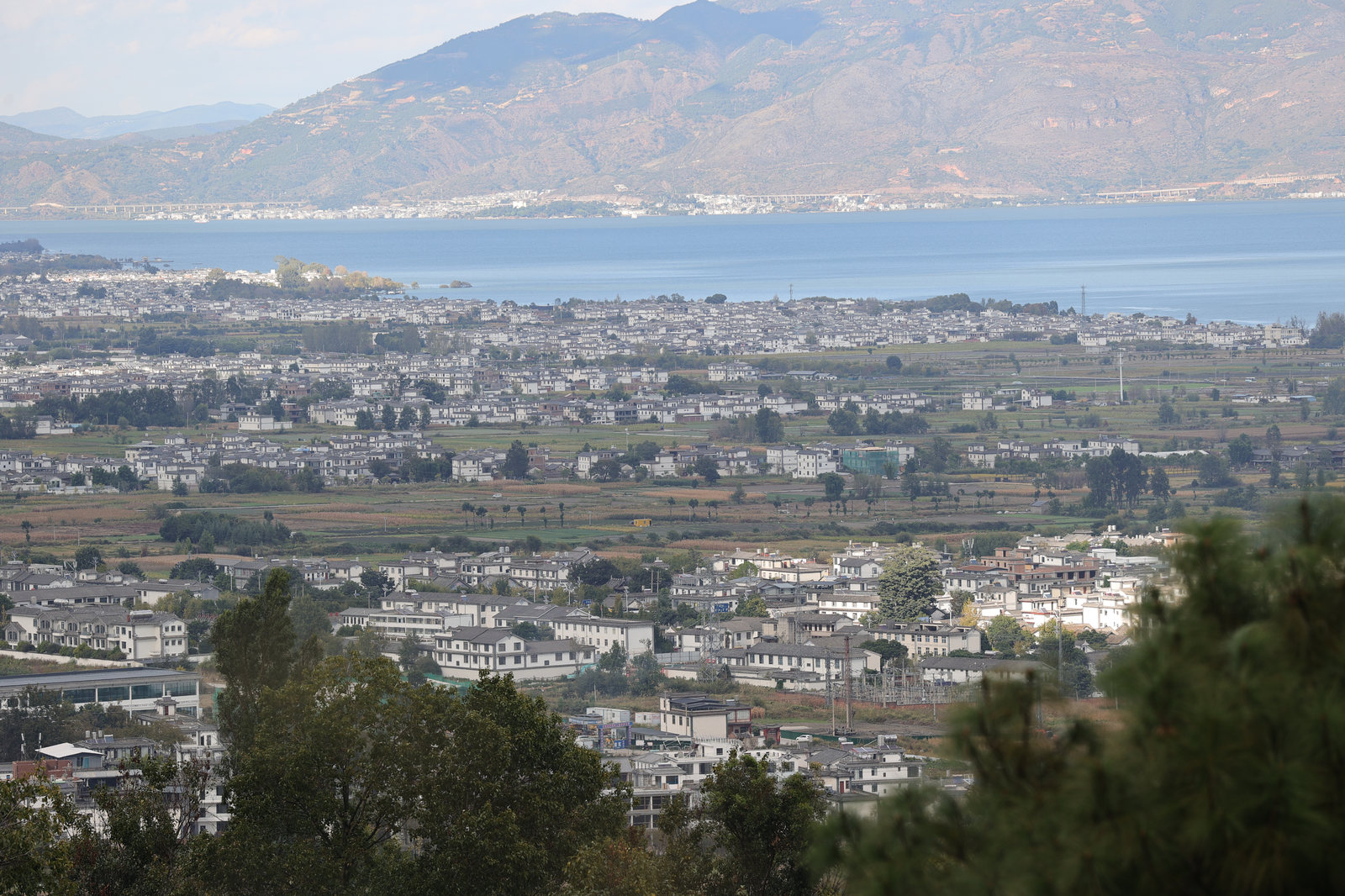
Everyone photographs Dali from the same three places. Here are the ones I go back to, season after season, with the timing that makes them work.
A note on method: all of these are reachable without a tour group. Sunrise in Dali is late — around 07:40 in winter, 06:20 in summer — which makes early shooting civilised. Sunset is early, 18:20 in winter. The good light is not long, so the exact spot matters.
1. Erhai Lake, west shore, before sunrise
The reason to be on the west shore at dawn is that you are looking east, across the water, at the sun coming up behind the eastern hills. In still weather the lake flattens into a mirror and you get the mountains doubled.
Time: 40 minutes before sunrise to 30 minutes after.
Where: the shoreline between 才村 and 磻溪, or anywhere along the 环海西路 bike path.
How: e-bike from the old town, 15 minutes.
If there has been snow on Cangshan in the previous days, this is the shot: snow on the peaks, pink sky, glass water. It happens a handful of mornings each winter.
2. Cangshan cloud sea, from the Jade Belt Road
When humid air from the lake meets the cold mountain, the cloud sits in the valley below the 玉带云游路 and you are above it. The stone path runs across the mountain face at about 2,600 m; walk ten minutes either direction from the 感通 cable car station and you have the view to yourself.
Time: 08:00–10:00, after the cloud has formed but before it burns off.
Where: the first two kilometres of the Jade Belt path, either direction from 感通.
How: cable car up (opens 08:30, ¥110 one way), walk, cable car down.
This is not an everyday sight. It needs a cool night, a warm morning and no wind. Check the sky at dawn from the old town: if there is a low band of cloud sitting on the mountain, go.
3. Three Pagodas, from the reflection pool
The classic, and still worth doing once. The telephoto compression of the pagodas against Cangshan behind them only works from the far end of the pool, and only when the water is still.
Time: 08:00, right at opening, before the tour groups and before the wind picks up.
Where: the pool at the rear of the 三塔寺 compound.
How: ¥75 entry, 20 minutes north of the old town by taxi.
4. Xizhou old town, morning market
喜洲 is a Bai market town with a square, a morning market and a lot of white-walled, painted-eave architecture. The market starts before 07:00 and is finished by 10:00; after that the town is quiet and the light is hard.
Time: 07:00–09:00.
Where: the market street behind the 四方街 square.
How: 30 minutes north of Dali by e-bike or bus.
Ask before photographing people close up. A nod and holding up the camera usually gets a yes; a long lens and a smile gets a better picture than either.
5. Shuanglang, sunset across the lake
The east shore faces west, so 双廊 gets the sun setting behind the mountains on the far side, with the lake in between. It is the most photographed sunset in Dali, which means it is crowded — walk 15 minutes north out of the village and the crowd thins out completely.
Time: 1 hour before sunset.
Where: north of 双廊 village along the shore road.
How: 1 hour by car from the old town; stay overnight rather than drive back in the dark.
6. Rapeseed fields, February to March
The fields around 喜洲 and further north turn yellow for roughly three weeks in late February and March. Exact timing shifts every year with the cold; ask locally, or watch the fields as you ride north.
Time: any time the light is soft — morning or late afternoon.
Where: the farmland west of the lake road, between 喜洲 and 沙坪.
How: e-bike, 40 minutes.
7. Cangshan snow, January and February
Snow on the range is a winter event, and it does not last. The best view is from the lake shore, not the mountain: the snow sits on the peaks and the fields below are still green.
Time: sunrise, or the last hour before sunset when the peaks catch side light.
Where: the west shore again, or the elevated road above 才村.
How: e-bike.
8. The old town at blue hour
The old town is not a landscape, but the gate towers lit at dusk, with the last blue in the sky, are worth 15 minutes. Use a tripod and expose for the sky.
Time: 20–40 minutes after sunset.
Where: 南门 (South Gate) and the wall walk above it.
How: walk.
9. Any village, any morning
The most reliable pictures in Dali are not at the landmarks. They are in the fields at 08:00, when the mist is still in the low ground and someone is already working. Pick a village road, ride until the buildings end, and wait.
Time: 07:30–09:00.
Where: anywhere off the main lake road.
How: e-bike.
Gear and practicalities
- Lens range — 16–35 mm for the lake and fields, 70–200 mm for compressing the pagodas against the mountain. A 24–105 mm covers almost everything here.
- Filters — a polariser is the single most useful filter on the lake; it cuts the glare and brings back the colour in the water.
- Tripod — needed for blue hour and for long exposures of the lake at dawn.
- Wind — the lake wind picks up around 10 a.m. and does not drop until evening. Shoot water reflections before then.
- Altitude and sun — 1,976 m; the UV will burn you while the air feels cool.
All photographs on this page are mine, shot on location in Dali. Prints and licences are available at Nature Stock Media.